Why Hospitals Need Real-Time Visibility
In today’s healthcare environment, clinical teams face mounting challenges:
- Supply and equipment shortages or misplacement — Surgical kits, high-value consumables, or emergency supplies go missing or expire.
- Medication administration errors due to manual tracking, manual labeling or patient mis-identification.
- Fragmented workflows — Supplies, medications, patient ID, labeling, asset tracking — all managed by different teams with paper or legacy systems.
- Regulatory and compliance pressure — Accreditation bodies and internal safety committees demand accurate patient identification, reliable pharmacy labeling, traceability of supplies, and audit trails.
- Labor inefficiency — Staff spend too much time looking for equipment, verifying labels, or chasing down supplies, rather than focusing on patient care.
These problems aren’t just operational, they directly impact patient safety, satisfaction, staff workload, and the hospital’s bottom line.
How Connected Solutions Solve Common Challenges
As a trusted healthcare solutions partner, MSM Solutions doesn’t just provide Zebra hardware, we ensure it works seamlessly within the complex clinical, pharmacy, and supply chain systems your teams rely on every day. We understand the strict requirements around patient safety, traceability, and compliance, and we design our deployments to support the way hospitals actually function.
By combining Zebra’s purpose-built healthcare technologies with MSM’s integration expertise, hospitals gain reliable, end-to-end solutions that enhance care quality while reducing operational strain. Three critical areas make the greatest impact:
1. Inventory Accuracy and Asset Visibility (Supplies & Equipment)
Using RFID tags on kits, high-value supplies, and equipment — combined with Zebra mobile/RFID readers and smart-cabinet tracking — hospitals get real-time visibility into what’s in stock, where it is, and when it’s used.
A six-month study of a large hospital using an RFID “smart cabinet” for surgical supplies found: 0% stock-outs and 0% stock mismatches. The percentage of correct patient assignments for high-value items rose from ~ 36% to 100%, and supervisory staff time spent on logistics dropped by 58%. Industry experts estimate that a 200-bed hospital using RFID could save roughly $600,000 per year through reduced shrinkage, fewer rentals or replacements, deferred purchases, improved productivity, and better supply chain management.
This kind of visibility dramatically reduces waste, improves readiness (especially for ORs or emergency care), and ensures expensive assets are not lost, misplaced, or under-utilized.
2. Positive Patient Identification (PPID) & Reliable Label Creation
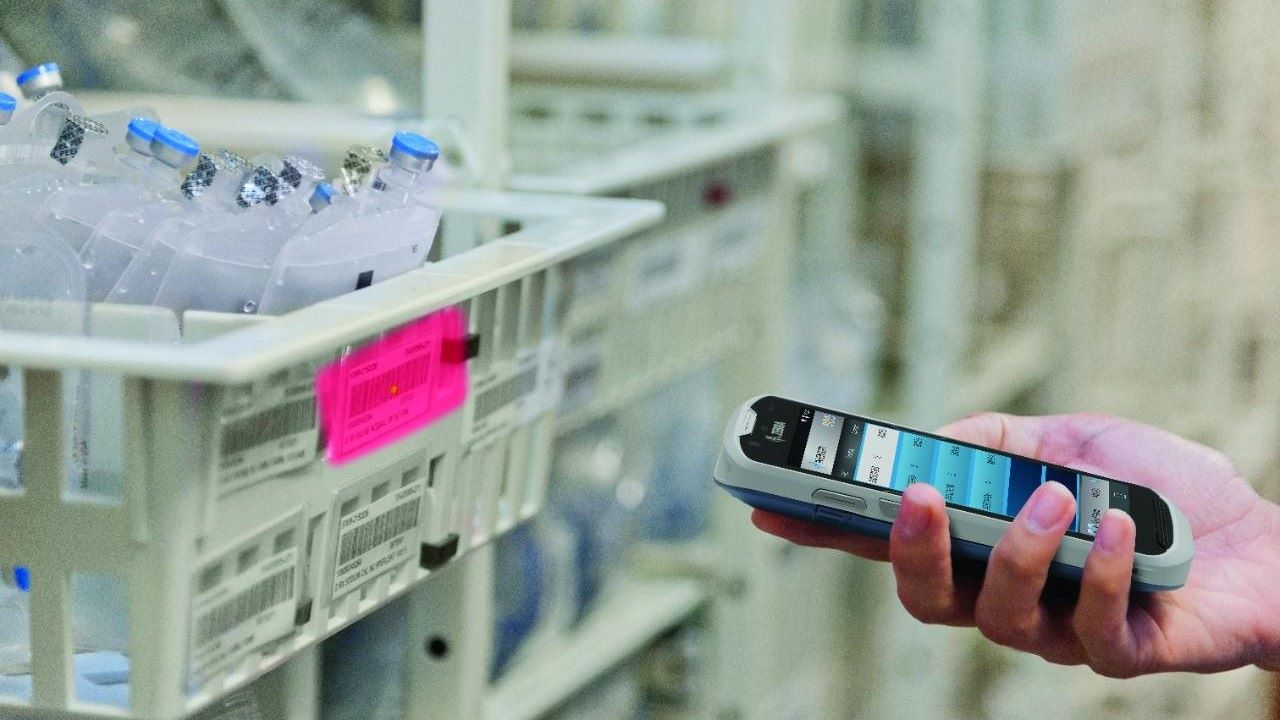
Misidentification remains a leading cause of medical error in hospitals. Implementing barcode scanning of patient wristbands, especially when tied into medication administration or specimen labeling, and helps ensure the right patient, right treatment, right time.
A meta-analysis of wristband barcode medication scanning across multiple studies found such scanning reduces medical errors by about 57.5%. Another study showed that switching from traditional medication prep to barcode-assisted prep cut overall medication preparation errors from 9.9% down to 4.5% — a 54.5% relative reduction. Wrong-medication and wrong-dosage errors dropped dramatically, and some error categories fell to zero after implementation. OUP Academic
For a 250-bed hospital administering, say, 200,000 doses per year, this could mean tens of thousands fewer potential medication errors annually, fewer adverse drug events (ADEs), and a significant boost to patient safety and staff confidence.
3. Pharmacy Compliance & Unit-Dose Label Printing
For hospitals and health systems accountable to stringent regulatory standards and accreditation requirements, accurate pharmacy labeling, especially for unit-dose medications, is essential.
With Zebra printers like the ZQ610 and HC2X/HC5X Series mobile computers, pharmacy staff can print compliant unit-dose labels on demand at the bedside or in the medication prep area, eliminating handwritten labels, transcription errors, and manual re-work. When combined with barcode scanning at medication administration, this helps close the loop from pharmacy to patient; reducing the risk of wrong medication, dosage, or administration for every single dose.
Projected Impact — What a Mid-Sized Hospital Might Realize
Here’s a summary of gains a mid-sized hospital might achieve after deploying Zebra solutions (within 12–18 months), assuming typical utilization across supply, pharmacy, and clinical areas:
| Area / Metric | Estimated Impact / Savings |
| Supply shrinkage, loss, expired items (with RFID) | Save up to $600,000/year (on a 200-bed scale) |
| Staff time spent on supply logistics & restocking | Up to 58% time reduction (logistics staff); more time for patient-facing care |
| Medication preparation error rate (before vs after barcode scanning) | Error rate reduced by as much as 54% |
| Potential wrong-patient medications | Significant drop — in one study, transcription errors reduced from 0.089% to 0.036% post-implementation |
| Stock-outs / supply shortages for critical kits (OR, ER, critical care) | Smart-cabinet tracking (in study noted above) reported 0% stock-outs over a 6-month time period |
| Regulatory compliance risks & audit readiness | Full traceability of supplies, medications, and patient-specific items — audit trails in place with barcode/RFID + label printing + scanning |
These gains are not hypothetical — they rest on real-world data from peer-reviewed studies and hospital implementations.
How MSM Solutions Simplifies Deployment
Deploying barcode, RFID, printing, and scanning technology in a hospital is not plug-and-play. That’s where MSM Solutions makes the difference:
- Deep Healthcare Expertise: We understand regulatory pressures, audit demands, and the high stakes of patient safety.
- End-to-End Integration Support: From initial needs analysis (supplies, pharmacy, clinical flows) to hardware selection (Zebra mobile computers, scanners, printers), deployment, and user training.
- Workflow Consulting: Helping you redesign processes (e.g., how supply cabinets are managed, how pharmacy workflows operate, when and where scanning happens) so the tech supports (not disrupts) daily operations.
- Ongoing Support & Maintenance: Ensuring devices remain reliable, firmware stays current, and staff compliance stays high over time.
- Scalable Implementations: Starting from a pilot (i.e., one OR suite, one pharmacy module, one supply area) and expanding as results and staff buy-in grow.
In short: MSM Solutions doesn’t just deliver Zebra hardware — we deliver working systems that drive measurable results.
Bringing It All Together — Better Care, Safer Patients, Lower Costs
With real-time inventory visibility, positive patient ID, and compliant pharmacy labeling, all backed by robust integration and support, hospitals can finally address long-standing inefficiencies, error risks, and compliance burdens.
For IT and informatics leaders at 250-bed regional hospitals or large academic centers, this is not just about upgrading hardware. It’s a strategic investment in safer care, staff efficiency, better supply utilization, and controlled costs.
If you’re ready to move from paper-based chaos or fragmented processes to a fully integrated, real-time, compliant workflow, MSM Solutions and Zebra give you the foundation to get there.