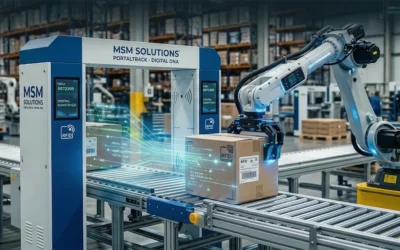

RFID provides 99% inventory accuracy by enabling bulk, non-line-of-sight scanning of assets. Industries switch to RFID to eliminate manual errors, reduce labor costs by up to 75%, and gain real-time visibility into high-value supply chains that barcodes and manual paper-based systems cannot provide.
How does RFID improve asset tracking accuracy?
RFID technology uses electromagnetic fields to automatically identify and track tags attached to objects. This process removes the need for human intervention, which accounts for the majority of data discrepancies in warehouses and data centers.
According to a study by Auburn University’s RFID Lab, implementing RFID can raise inventory accuracy from an average of 63% to over 95%. This precision ensures that businesses have real-time visibility regarding their physical assets at any given second.
What is the difference between RFID and barcode tracking?
The primary difference lies in the scanning method: barcodes require a direct line-of-sight and individual scanning, whereas RFID reads tags via radio waves from a distance. A worker using a handheld RFID reader can scan up to 100 items per second without seeing the items.
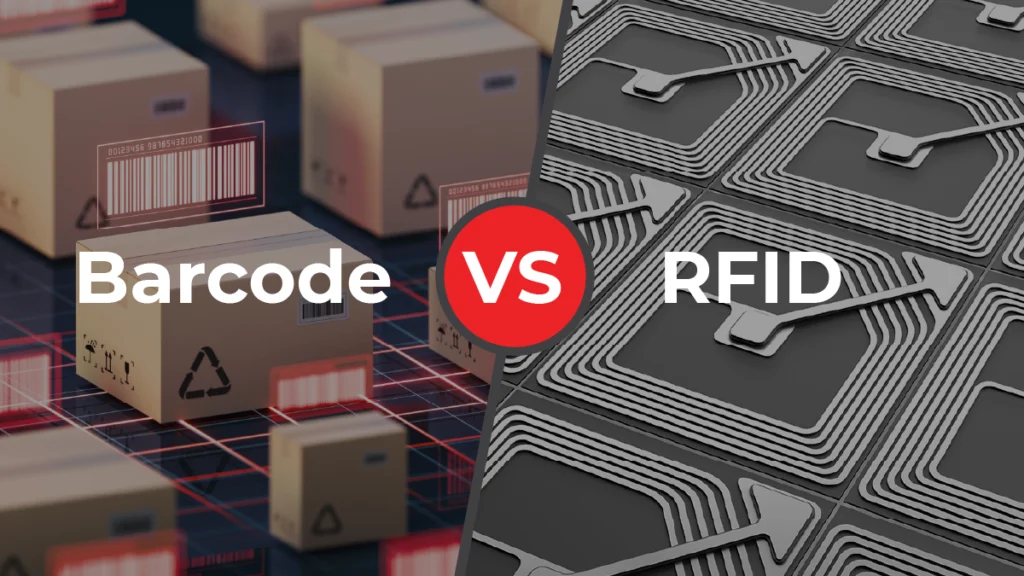
In high-density environments, barcodes become a bottleneck because each label must be manually aligned with a laser. RFID allows for bulk scanning of entire pallets or server racks, reducing the time spent on audits by as much as 90%.
How does RFID help reduce downtime risk?
RFID provides continuous visibility, allowing maintenance teams to locate critical tools or backup hardware instantly. In sectors like manufacturing, a misplaced tool can halt a production line, costing companies an average of $22,000 per minute according to industry benchmarks.
By setting up RFID read zones at cabinets, doors or portals, alerts are triggered if a RFID tagged asset leaves the designated area. This proactive monitoring ensures that equipment is always where it needs to be, preventing costly service disruptions.
What industries benefit most from RFID solutions?
Industries with high asset volumes and strict compliance requirements such as Automotive, Healthcare, Retail, Distribution, and Manufacturing see the greatest operational and cost benefits. By implementing RFID Portal Track, these sectors automate data collection to eliminate manual errors and streamline complex supply chain workflows.
Automotive manufacturers use RFID to track parts through every stage of assembly, ensuring the correct components reach the line at the right time. This level of precision is vital for Just-in-Time (JIT) manufacturing, where a single missing part can stall a production line costing thousands of dollars per minute.
Healthcare providers like hospitals use RFID to track pharmaceuticals, equipment, and specimens, reducing the time nurses spend searching for gear by 30% per shift. According to NTX Laboratory, specialized tracking in labs can even cut product search times from hours down to just five minutes, ensuring critical resources are available exactly when patients need them.
Retail organizations leverage RFID to maintain near-perfect inventory accuracy, which is essential for successful omni-channel fulfillment. Research shows that RFID can improve inventory accuracy from 65% to 98%, allowing retailers to reduce out-of-stocks and increase sales by up to 10%.
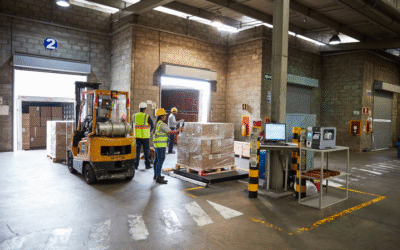
Distribution centers utilize RFID to automate receiving and shipping verification without stopping forklifts or opening boxes. By capturing data on entire pallets simultaneously, facilities can increase dock productivity by 80% and ensure 100% shipping accuracy to prevent costly retailer chargebacks.
Manufacturing plants benefit from RFID by monitoring Work-in-Process (WIP) and tracking expensive returnable containers or tools. This real-time visibility helps managers identify bottlenecks in the production cycle and reduces the capital expenditure required to replace lost or misplaced equipment.
Industries switch to RFID to eliminate manual errors, reduce labor costs by up to 75%, and gain real-time visibility that barcodes cannot provide.
What is the ROI of deploying RFID?
The Return on Investment (ROI) for RFID typically manifests within 6 to 12 months through labor savings and loss prevention. By automating the audit process, a global logistics firm can reduce its annual inventory labor costs by over 75%.
| Metric | Manual/Barcode | RFID Tracking |
| Inventory Accuracy | 60% – 70% | 95% – 99%+ |
| Audit Speed | Hours/Days | Minutes/Seconds |
| Labor Costs | High (Manual) | Low (Automated) |
| Shrinkage/Loss | Significant | Minimal |
Beyond labor, ROI is driven by improved asset utilization. When a company knows exactly what it owns and where it is located, it avoids “ghost assets”paying taxes and maintenance on equipment that is no longer in the building.