Have you ever stopped to calculate the true cost of the five-second fumble? This is that moment every few minutes when an operator pauses their flow, reaches for a handheld scanner, pulls a trigger, and sets it back down.
In high-velocity manufacturing, those seconds are more than just a nuisance. They are a tax on your throughput. For years, many manufacturers have viewed Fixed Industrial Scanning for Manufacturing as a luxury that is too complex or too expensive for a standard pack bench. But as margins tighten and labor remains a fickle resource, the reality is shifting. The most expensive way to scan a barcode today is with a human hand. Embracing Fixed Industrial Scanning for Manufacturing can transform your operations and streamline efficiency through enhanced productivity.
At MSM Solutions, we are seeing a fundamental shift in how the most efficient plants view data capture. It may be time to stop thinking of scanning as a manual task, and start seeing it as an automated layer of operational intelligence.
The Complexity Myth: Fixed Does Not Mean Rigid
The primary hesitation we hear from plant managers regarding fixed scanning is the fear of complexity. There is a lingering perception that installing a fixed scanner requires specialized engineers and hours of downtime.
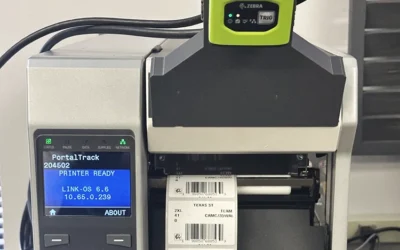
Thanks to the evolution of unified platforms like Zebra Aurora, that barrier has crumbled. Modern fixed industrial scanners are no longer hardware traps. They are software-driven powerhouses that allow you to manage your entire fleet of scanners from a single intuitive interface.
The beauty of this evolution is scalability. You might start with a simple fixed scanner to track boxes on a conveyor. Six months later, you realize you need to verify that a label is applied straight or that a bottle cap is fully tightened. With a legacy system, you would be buying new hardware. With modern solutions, you simply unlock a software license to add vision capabilities to the device you already own.
Redefining Efficiency: The Hands-Free Revolution
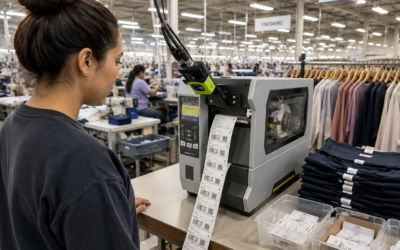
Consider the manual packing station. Traditionally, an operator picks an item, grabs a handheld scanner, scans the UPC, puts the scanner down, picks up the box, and applies a label.
By moving to a fixed scanning environment where the scanner is mounted above the workstation, the operator simply moves the item through the scan zone as they place it in the box. This hands-free approach, especially when paired with linerless mobile printers, can increase operator efficiency by up to 33 percent.
When you remove the physical weight of the device and the repetitive motion of reach-scan-return, you do not just speed up the line. You reduce worker fatigue and the risk of repetitive strain injuries.
Solving the Unscannable Problem
One of the biggest headaches in manufacturing is the Direct Part Mark (DPM) or the smudged, low-contrast barcode. When a handheld scanner fails to read a mark on a metallic part or a wrinkled polybag, the line stops. An operator has to manually type in a serial number, which is an invitation for human error.
Fixed industrial scanners are engineered with advanced imaging algorithms that outperform the human eye. Whether it is a laser-etched code on a shiny engine component or a label that has been scuffed during transit, these systems use deep learning to reconstruct damaged data. This ensures that every part in motion creates a digital footprint, feeding your shipping manifests and ERP systems in real time without a single miss.
At a Glance: Solving the Manufacturing Maze
To understand how fixed scanning transforms specific pain points, look at how these solutions address the most common challenges on the plant floor:
| Operational Area | The Challenge | The Fixed Scanning Benefit |
| Inventory & Supply Chain | Poor visibility of DPM codes; manual tracking leads to shipping manifest errors. | Total Visibility: Captures multiple, challenging codes on parts in motion, creating an automated digital record. |
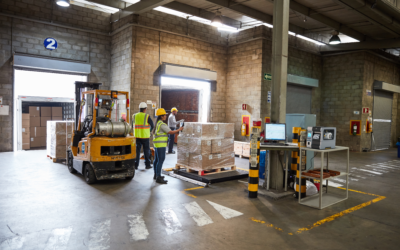
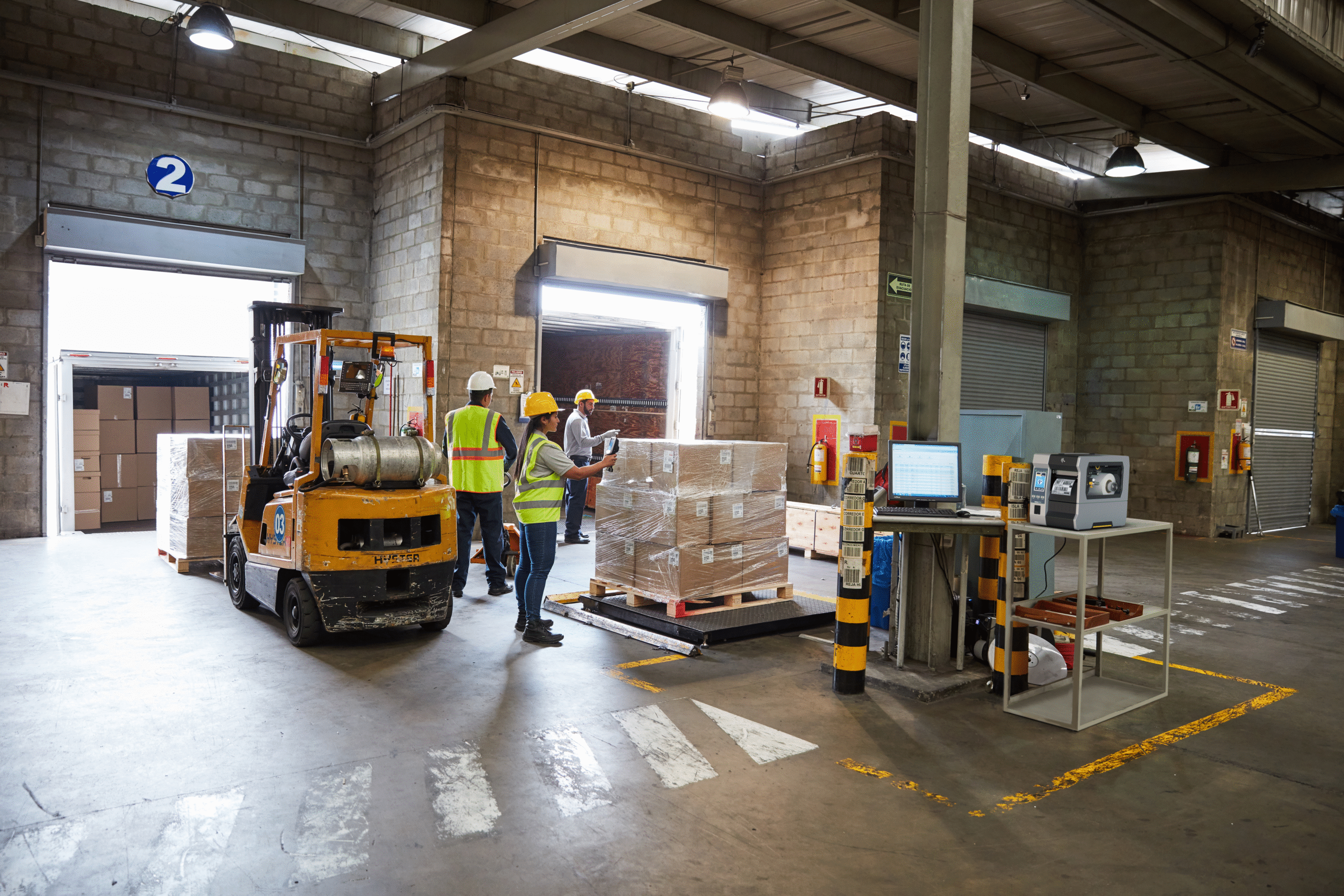
| Packaging & Shipping | Wrong or missing parts or mislabeled boxes lead to costly re-ships and unhappy customers. | Automated QC: Scanners verify every box’s contents at the station, ensuring 100 percent order accuracy before it hits the truck. |
| Manual Packing | Handheld scanners create bottlenecks; operators waste time juggling devices. | Efficiency Gain: Hands-free scanning allows for a fluid, natural workflow and faster throughput. |
| Compliance & Quality | Smudged or missing labels lead to retailer rejections and brand-damaging recalls. | Immediate Verification: Software like Aurora Focus verifies label presence and data quality the moment they are printed. |
| Device Lifecycle | Replacing hardware every time operational needs change or technology advances. | Future-Proof ROI: Devices are software-upgradeable. Add Machine Vision or new symbologies without buying new hardware. |
The Bottom Line: Can You Afford to Stay Manual?
The expensive label often attached to fixed industrial scanning is a misunderstanding of Total Cost of Ownership (TCO). When you factor in the 30+% boost in packing speed, the elimination of re-shipment costs due to errors, and the ability to upgrade your hardware via software rather than replacement, the math changes.
Fixed scanning is not a complication. It is the simplification of your most chaotic processes. It takes the guesswork out of the hands of your operators and puts the data exactly where it belongs: in your system, in real time, every single time.
Is your production line ready to lose the handheld weight? Learn more about the advantages of Fixed Industrial Scanning in our e-guide.