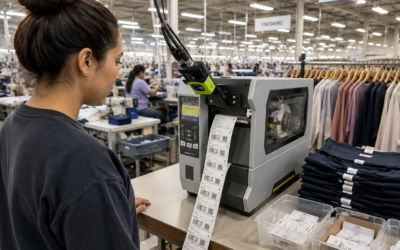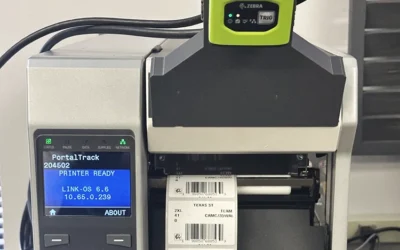

Moving from legacy barcode systems to RFID provides a transparent, modern window into your inventory. By evolving existing label processes into automated tracking hubs, businesses can address unique operational challenges through field-tested technology and seamless integration.
Manual & Barcode vs RFID Inventory Management and Supply Chain
| Feature/Metric | Manual & Barcode Inventory | RFID Automated Inventory | Impact on Supply Chain & ROI |
|---|---|---|---|
| Data Collection | Line-of-Sight: Must scan every barcode individually. | Mass Reading: Scans hundreds of tags per second simultaneously. | 70%+ Labor Reduction: Drastically lowers man-hour costs. |
| Typical Accuracy | 65% – 75%: Frequent phantom inventory and human error. | 97% – 99%: Near-perfect real-time visibility. | Reduced Stockouts: Eliminates lost sales due to data errors. |
| Shipping & Logistics | Error-Prone: High risk of incorrect shipments and picking errors. | Validated Picking: 7% increase in factory picking accuracy. | Fewer Chargebacks: Prevents costly retailer penalties for shipping errors. |
| Compliance & Loss | Reactive: Loss only discovered during manual audits. | Proactive: Real-time loss prevention and location tracking. | Tariff Accuracy: Ensures correct valuation for duties and taxes. |
| Audit Speed | Days/Weeks: Often requires plant shutdowns or overtime. | Minutes/Hours: Can be performed daily without disruption. | Operational Flow: Keeps production moving without audit freezes. |
Manual tracking and outdated barcode systems often result in significant inventory errors. These inaccuracies create a domino effect of hidden costs across the supply chain:
- Reconciling with Tariffs & Duties: Inaccurate inventory records can lead to misclassification or incorrect valuation of goods, resulting in overpayment of tariffs or heavy regulatory fines.
- Chargebacks & Compliance Penalties: Retailers often issue expensive chargebacks for labeling errors or shipping discrepancies. Precise record-keeping is critical for compliance in industries like healthcare and logistics to avoid these penalties.
- Incorrect Shipments: Without real-time visibility, businesses miss opportunities to fulfill customer demand efficiently, resulting in delayed shipments or lost sales.
- Loss Prevention: Inaccurate tracking makes it difficult to identify where shrinkage occurs, whether through theft, damage, or administrative errors.
- Operational Inefficiencies: Time spent searching for misplaced items or correcting shipment errors directly impacts productivity.
Ready to Modernize Your Inventory Management Operations?
Implementing a professional RFID inventory management solution allows businesses to eliminate manual tracking errors, reduce holding costs, and improve supply chain efficiency with real-time visibility. Accurate tracking also ensures compliance in highly regulated industries such as healthcare and logistics.
Take the first step toward automation. Request a Free 30-Minute Inventory Process Audit today to calculate your potential ROI and design a custom implementation roadmap.
| Phases | Action Items | Key Success Factors |
|---|---|---|
| 1. Assessment | • Define Objectives (Accuracy vs. Loss Prevention) • Establish KPIs (ROI benchmarks) • Audit current inventory management systems | Align with GS1 Standards |
| 2. Hardware Selection | • Hardware: Handhelds vs. Fixed Portals • Tags: RFID labels vs. On-Metal/Liquid specialized tags • Software: Cloud integration vs. Local middleware, requirements and functionality. | Identify RF Interference early |
| 3. Pilot Program | • Select a small-scale “Read Zone” or product line • Conduct staff training on hardware usage • Collect and analyze real-world read rates | Refine before scaling |
| 4. Deployment | • Full infrastructure rollout • Enterprise-wide software integration • Continuous monitoring of RFID Costs & License Fees | Review data for ongoing ROI |
Calculated ROI: The Price of Action vs. Doing Nothing
Based on industry standards from the RFID Journal, a typical facility with manual processes faces a hidden “tax” on their operations:
- Minimum Manual Inventory Management Labor Cost: 8 man-hours/day @ $25/hr per person = $52,000
- The RFID Alternative: By reducing inventory management labor by 70%, the same facility can save over $36,400 annually per person in labor alone, not including the savings from reduced chargebacks and recovered lost inventory.
- To see how these numbers apply to your specific facility, you can review the RFID Cost of Action vs. Doing Nothing analysis.
Ready to Modernize Your Operations?
With over 45 years of expertise, our specialists ensure your hardware and software work together to solve your business challenges.
- Identify hidden inefficiencies in your manual workflow.
- Get a custom implementation roadmap tailored to your facility.
- Calculate your specific ROI based on labor and shipping error data.