In manufacturing, inventory control relies on a simple premise: your management systems must accurately reflect the physical realities of your plant floor. When discrepancies occur between inventory records and actual stock, operational friction follows.
A delay in logging raw materials can stall a production line. A misplaced sub-assembly during work-in-process (WIP) leads to unnecessary downtime and re-orders. A shipping error results in costly chargebacks and dissatisfied customers.
Resolving these challenges requires moving away from manual data entry and disconnected tracking methods. By pairing ruggedized collection hardware directly with a real-time tracking engine like MSM Solutions’ PortalTrack, facilities create an integrated system that captures inventory movement automatically at every stage of production.
1. The Central Software Engine: PortalTrack
Hardware devices gather data, but software turns those data points into actionable control. Enterprise Resource Planning (ERP) systems manage high-level scheduling and financials, but they often lack the granular data and visibility required to monitor fast-moving floor activity.
MSM Solutions’ PortalTrack bridges this gap, serving as the central visibility engine for your plant floor:
- Unified Material Tracking: Tracks inventory seamlessly as it moves from raw receiving, through WIP staging, to finished goods storage and dispatch.
- Automated Data Capture: Consolidates data from RFID portals, mobile terminals, barcode scanners, and vision systems into a single dashboard.
- System Synchronization: Keeps your higher-level ERP and warehouse systems updated continuously, reducing the need for manual reconciliation.
2. Raw Materials: Streamlining the Receiving Dock
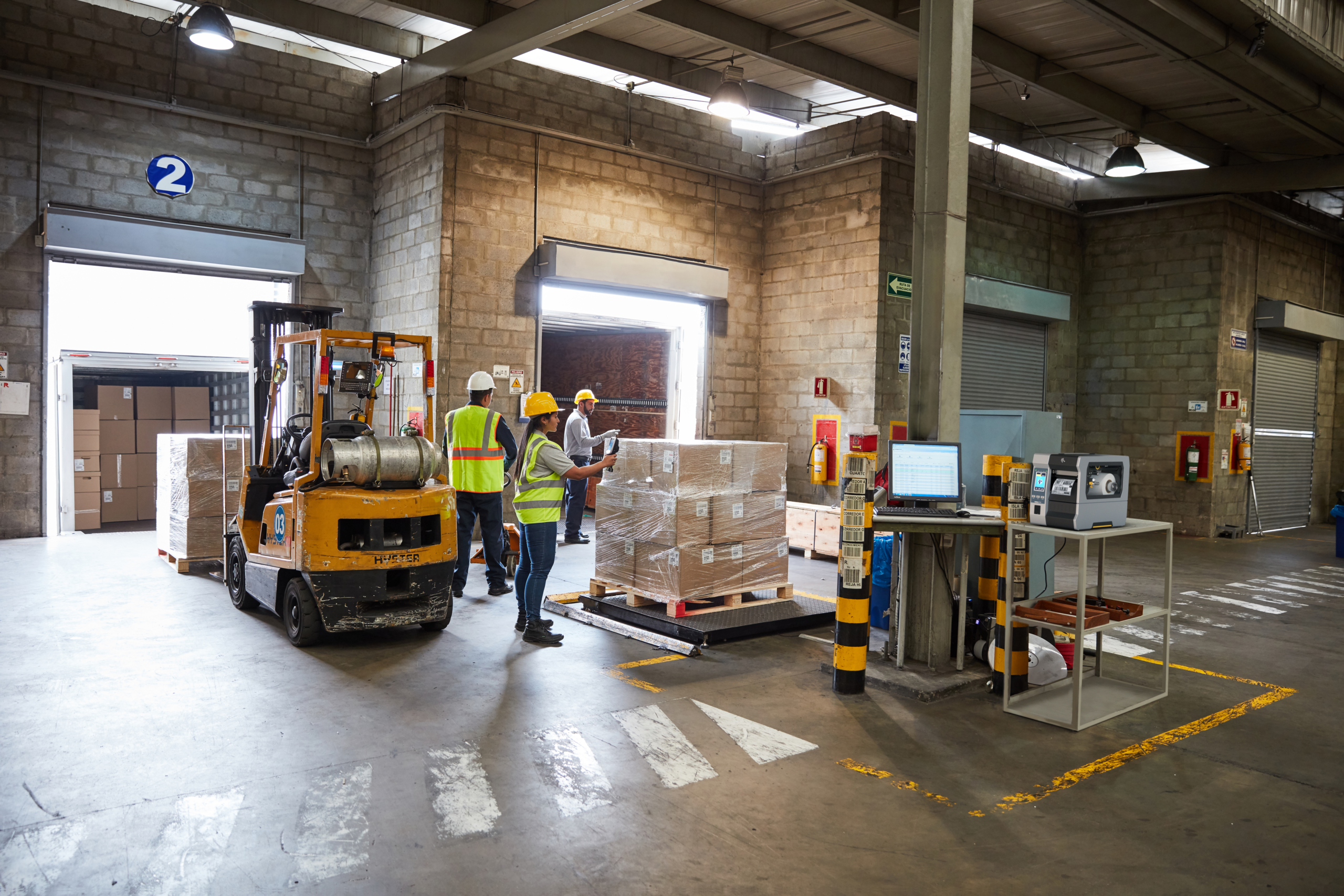
Inventory accuracy begins the moment materials arrive at your facility. Delays or errors at the receiving dock create cascading inaccuracies throughout the rest of your operation.
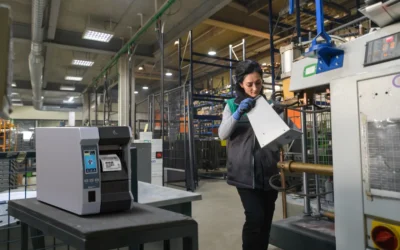
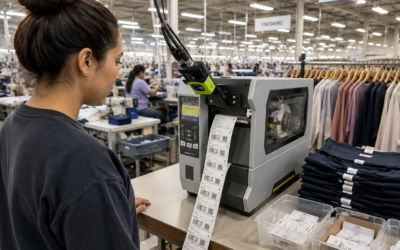
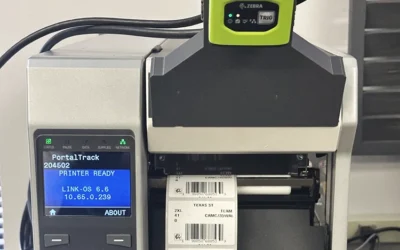
- Industrial RFID and Barcode Printing: Heavy-duty thermal printers create durable, high-density barcodes and encode smart RFID tags designed to survive harsh manufacturing environments, chemical exposures, and high temperatures.
- Fixed RFID Portals: As incoming pallets move through dock doors, fixed RFID arrays scan every tagged item simultaneously without requiring operators to stop or dismantle loads.
- The Strategic Outcome: Incoming inventory is verified instantly against purchase orders and updated in PortalTrack, allowing raw stock to move immediately into production planning.
3. Work-in-Process (WIP): Maintaining Visibility Across Assembly Lines
Work-in-process is often the most challenging phase to manage. Components move frequently between machining centers, staging areas, and secondary assembly, making real-time tracking difficult.
- Overhead RFID Arrays: Mounted overhead in key production zones, these readers automatically monitor the location and movement of high-value parts and staging totes without manual intervention.
- Rugged Mobile Computers: Shop-floor operators use durable handheld or wearable scanners to log material consumption, transfers, and stage updates instantly.
- The Strategic Outcome: Production managers maintain complete visibility over active jobs, reducing lost parts, cutting search times, and maximizing machine utilization.
4. Quality Control: Incorporating Machine Vision
Knowing where an item is located is only part of the equation; verifying its accuracy and condition before it moves to the next phase is equally critical.
- Machine Vision Systems: Automated smart cameras inspect components along the conveyor line to verify part assembly, date and lot code legibility, and Direct Part Markings (DPM).
- The Strategic Outcome: Quality defects are flagged and isolated early in the cycle, preventing flawed WIP from consuming additional time or raw materials.
5. Finished Goods and Shipping: Ensuring Outbound Accuracy
The final phase of inventory management is ensuring that completed products are packaged, staged, and loaded accurately according to customer specifications.
- Fixed High-Speed Scanners: Mounted along outfeed lines, multi-directional, fixed industrial scanners capture 1D/2D barcodes on moving boxes to route finished products to the correct staging lanes.
- Shipping Gate Verification: Fixed portals scan outgoing pallets as they are loaded onto trucks, cross-referencing items against active sales orders in PortalTrack.
- The Strategic Outcome: Outbound shipping errors are caught before trucks leave the facility, protecting customer relationships and preventing costly return logistics.
A Single Source of Floor Truth
Isolating your hardware purchases creates small pockets of efficiency, but leaves your overall floor data fragmented. Combining specialized hardware with a centralized software platform like PortalTrack brings every piece of equipment into a single, cohesive workflow.
| Production Stage | Integrated Hardware | PortalTrack Strategic Outcome |
| Raw Materials | Fixed RFID Gates & Industrial Printers | Immediate dock-to-stock availability; reduced receiving delays |
| Work-in-Process | Overhead RFID & Machine Vision | Continuous location tracking; automated defect management |
| Finished Goods | High-Speed Scanners & Portals | Automated outbound verification; zero shipping mis-picks |
The key takeaway is straightforward: sustainable inventory control comes from automating data capture across every stage of your plant. When your physical hardware and central software operate in sync, you gain reliable inventory data, protect operating margins, and maintain a consistent, predictable workflow.
Interested in closing the gap between your physical inventory and your management systems? Contact the team at MSM Solutions to learn how PortalTrack can be configured for your plant floor.