The Real-World Engineering of Industrial Barcode Printer Maintenance
In a high-volume manufacturing plant, distribution center, warehouse or healthcare environment, efficient operation generally boils down to a barcode. A single barcode label on a pallet, an apparel hangtag, an engine block, or a vial of medication is the digital link between physical inventory and enterprise software. If a printer stops producing crisp, scannable labels, a bottleneck is created and productivity slows.
Industrial barcode printers like the ZT411 and ZT611 from Zebra Technologies are built like tanks to survive these demanding environments. Yet even the toughest metal-chassis machines face constant wear from microscopic dust, harsh chemical exposure, thermal stress, and continuous heavy use. Understanding what happens inside these machines under pressure, and how specialized service providers like MSM Solutions keep them running, is the secret to preventing costly operational delays.
MSM Solutions: A Zebra Premier Solution Partner
Not all printer repair services are built the same. MSM Solutions has earned, through training and certification, the designation of Zebra Premier Solution Partner – Advanced Printer Repair Specialist. This isn’t just a marketing badge; it is a rigorous technical standard that directly impacts your uptime.
To earn and maintain this tier of certification, our engineering team undergoes extensive, continuous factory training. It means we don’t guess when diagnosing complex mechanical or board-level failures, and offers us unique opportunities that not all printer providers can obtain:
- Direct Access to Zebra Engineering Resources
- Genuine OEM Parts
- Proven Field Commitment
“If you can’t print labels, you can’t ship product or deliver a service as effectively as is needed. It’s that simple. When a printer goes down on a busy shift, it hurts your productivity, delays deliveries, and impacts your bottom line. We built our service and support programs around a simple goal: fixing issues fast and keeping your hardware running so your team can focus on getting work done..”
— Blake Summers, Sales Executive at MSM Solutions
The Harsh Realities of High-Volume Production Environments
To understand why industrial thermal printers fail, you have to look at the severe conditions of the shop floor. Standard desktop thermal printers in an office setting experience controlled temperatures, low dust, and low print volumes. Industrial printers, on the other hand, operate in tough, continuous production settings where fine particles and heavy wear are constant challenges.
Apparel Manufacturing: The Airborne Fiber Problem
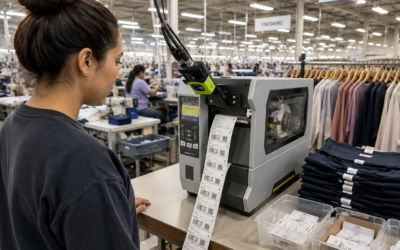
Apparel manufacturing facilities generate a microscopic haze of airborne lint and fabric fibers. As the cooling fans inside industrial printers draw air through the cabinet to cool internal electronics, this dust settles everywhere. Fiber builds up inside the media optical sensors, which track label gaps and black marks. When dust blocks these sensors, the printer loses track of where one label ends and the next begins, causing skipped labels, misaligned prints, and paper jams. Furthermore, fabric fibers mix with ambient moisture to form a sticky film over mechanical gears, increasing strain on drive belts and stepper motors.
Automotive Manufacturing: Heat, Vibration, and Chemical Vapor
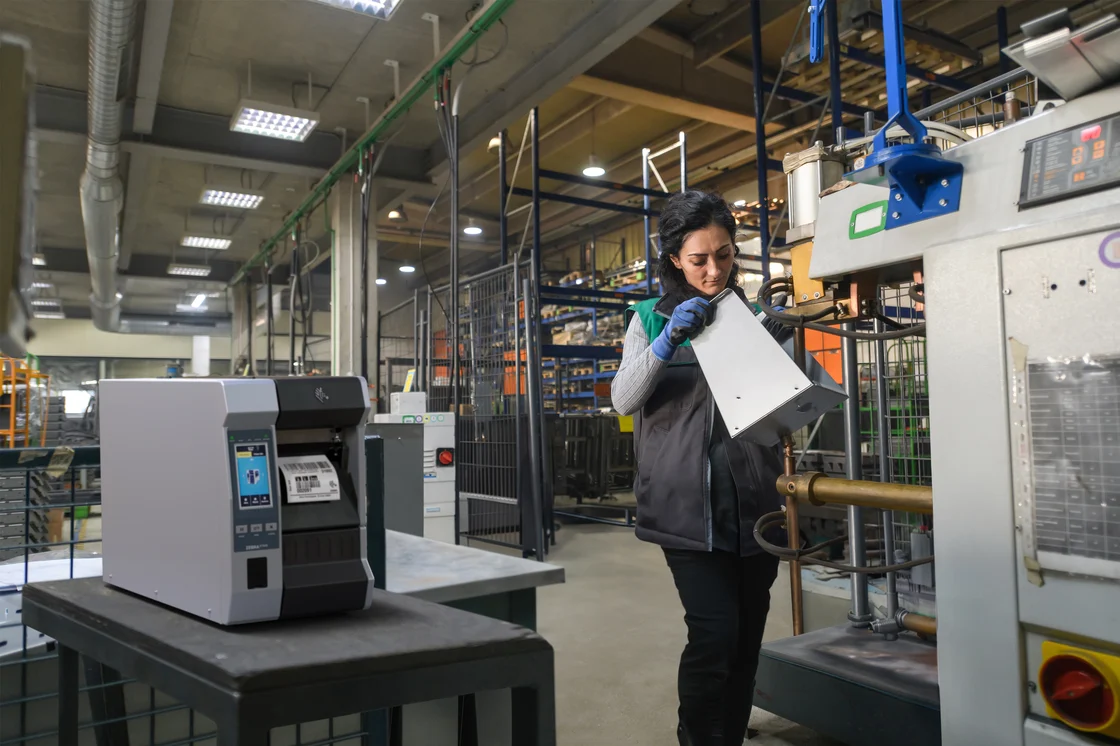
Automotive parts manufacturing demands heavy-duty direct thermal and thermal transfer media that can resist oil, brake fluid, and high temperatures. In these environments, printers operate close to metal stamping presses, robotic welding cells, and conveyor systems that generate continuous mechanical vibration. Over time, vibration can loosen printhead latching mechanisms, misalign media guides, or crack internal ribbon spindles. Chemical vapors in the air can also coat sensitive internal optics and dull printhead heating elements, leading to faint or uneven printing.
Food and Beverage: Temperature Extremes and Moisture
Food processing and cold-storage distribution facilities push hardware to its absolute limits. Printers frequently transition between warm packaging areas and sub-zero freezer vaults. Condensation builds up rapidly on metal components during these shifts, corroding electrical connections, fogging optical sensors, and causing thermal stress on ceramic printhead substrates. Cold environments also harden rubber platen rollers, reducing the traction required to feed thick, specialized synthetic media smoothly through the print mechanism.
Healthcare and Pharmaceuticals: Aggressive Cleaning and Strict Compliance
In pharmaceutical and healthcare manufacturing, labels must remain fully legible through rigorous sterilization and handling. Operators clean these production areas with aggressive chemical disinfectants. If cleaning solutions spray onto printer components or off-gas near the hardware, they can degrade internal plastics, corrode copper ribbon contacts, and dissolve protective coatings on delicate electronics. In addition, an unreadable barcode in healthcare is a major compliance risk that can halt shipment lots and trigger costly manual audits.
“When printers arrive at our depot for repair, the physical condition tells the whole story of the plant floor. We see cabinets caked in airborne lint, platen rollers completely grooved out from abrasive labels, and printheads cooked by operators cranking the thermal heat settings to maximum just to bypass a bad ribbon. Users often see these devices simply as a piece of hardware, but under the hood, they are high-precision mechanical tools operating in extreme environments.”
— Justin Johnson, Chief Software Architect at MSM Solutions
Anatomy of Common Hardware Failures in Industrial Printers
Even top-tier industrial printers like the Zebra ZT411 (a reliable mid-range workhorse) and the ZT611 (a heavy-duty 24/7 printing platform) run into physical wear over millions of inches of label production. When performance declines, the issue usually traces back to a few critical mechanical or thermal components.
1. Printhead Burnout and Dead Heating Elements
A thermal printhead relies on a high-density array of microscopic heating elements (measured in 203, 300, or 600 dots per inch). Each tiny resistor heats up and cools down hundreds of times per second to transfer ink from a thermal ribbon or activate direct thermal paper. Over time, continuous thermal cycling fatigues these elements, causing individual dots to fail. Burned-out dots leave crisp, white vertical lines through barcodes. If a white line cuts through a barcode guard bar, scanner engines will fail to read it.
2. Platen Roller Grooving and Media Slippage
The platen roller sits directly beneath the printhead, providing the hard rubber surface that presses media against the heating elements. Over months of feeding rough paper stocks, synthetic tags, or narrow labels, the continuous friction wears visible grooves into the rubber surface.
When a platen roller becomes grooved or pitted, it creates uneven pressure across the width of the label. The result is faint printing on one side, ribbon slipping, and tracking issues that skew media as it moves forward. In severe cases, hardened or slick platen rollers lose their grip entirely, leading to feed errors and persistent media jams.
3. Adhesive and Carbon Buildup
Thermal transfer ribbons use wax, resin, or wax-resin formulas to melt crisp images onto labels. When printers run continuously at high speed and heat, micro-particles of carbon ribbon and label adhesive flake off and bake onto the printhead’s heating edge. This burnt layer acts as an thermal insulator, forcing operators to turn up the printhead temperature to compensate. Higher heat further bakes the residue and drastically shortens the lifespan of the printhead.
In-House DIY Fixes vs. Authorized Service Partnering
When hardware fails under production deadlines, plant managers face a choice: let internal maintenance staff attempt a quick fix, or rely on an authorized repair partner. The structural differences in long-term outcomes are significant:
| Common Floor Failure / Issue | Unmanaged DIY Fix Attempt | MSM Solutions Resolution |
| Dead Printhead Elements (White lines on barcode) | Temperature cranked to 100% heat, burning out adjacent elements and ruining ribbons. | OEM printhead replacement, pressure balance, and thermal calibration matching media specs. |
| Media Tracking & Jams (Paper slipping sideways) | Media guides over-tightened by hand, stripping plastic gears and crushing label edges. | Platen roller replacement, drive-belt tension adjustment, and alignment of feed path mechanics. |
| False Sensor Errors (“Media Out” / “Ribbon Out”) | Sensors wiped with harsh solvents, melting optical lenses or leaving chemical haze. | Sensor array bench-cleaned, recalibrated for light intensity, and firmware sensitivity adjusted. |
| Faint or Uneven Print | Printhead toggle pressure unbalanced manually, causing uneven wear across the bar. | Full mechanical load testing, platen leveling, and ribbon spindle torque adjustments. |
End-to-End Services Built to Eliminate Downtime
Having a responsive, supportive partner like MSM Solutions makes all the difference when moving product out the door.We provide comprehensive, flexible service models designed to withstand harsh conditions, long shifts, and multiple operators so your team works at peak efficiency:
- On-Site Repair & Maintenance: Certified field engineers diagnose and repair mission-critical hardware.
- Depot Services: Deep-cleaning overhauls, mechanical rebuilding, and component-level repairs performed inside our dedicated service depot.
- Tailored Hot Swaps, Spares & Loaners: Pre-configured replacement hardware shipped instantly to keep your lines running while your unit is serviced.
- On-Shelf Backups & Spare Management: Staging customer-owned backup units ready for instant deployment the moment a line printer fails.
- Mission Critical Support: Technical assistance for high-volume environments that never turn off.
- Routine Evaluations & Hardware Check-Ups: Scheduled, preventive audits to catch mechanical wear before it manifests as an operational shutdown.
- On-Site Training & Installation: Hands-on instruction for floor operators on proper media loading, daily ribbon care, and routine printhead cleaning.
- Time & Materials Repairs: Flexible, on-demand repair options tailored to non-contracted or legacy hardware fleets.
Your peace of mind is our primary mission. By pairing rugged Zebra hardware with expert support from MSM Solutions, you ensure your barcode infrastructure remains an asset to your throughput rather than a liability to your bottom line.